Following our first call for capitalisation and the approval of 6 capitalisation initiatives, the Interreg North-West Europe Programme is preparing the opening of its 2nd call for capitalisation in December 2026.
This second call for capitalisation will be closing on Thursday, 20 May 2027 12.00 pm noon CET (11.00 am UTC+1).
Learn more about the main features of this second call below and see if this opportunity could help you take your project results one step further!
Overall objective
As was the case for the first call, the overall objective of the 2nd capitalisation call is to support the further uptake and roll-out of project outputs.
Projects will be expected to focus their capitalisation initiative on a clearly identified output that must have demonstrated:
- its capacity to successfully impact territories and / or citizens.
- its uptake and roll-out potential.
Capitalisation initiatives will also have to provide evidence that they go beyond what was initially planned in their original application form and that their results feed into the overall Programme indicator framework. In line with the overall Programme objectives, a clear contribution to cohesion and balanced territorial development will also be expected from capitalisation proposals.
Who can apply?
The second capitalisation call will be open to all approved 2021-2027 projects from all five priorities, except the ones that have already submitted an application in the first call. This applies to ongoing or closed projects from calls 1, 2, 4 or 5.
As for the first capitalisation call, neither 2014-2020 projects nor 2021-2027 call 3 small-scale projects will be invited to submit proposals for both process-related reasons and to maintain coherence in our overall approach. However, this does not prevent relevant partners from these projects from taking part in applications submitted by other parties.
The capitalisation application will have to be submitted by the project lead partner (LP) of the 2021-2027 project. However, this lead partner does not automatically need to play a major role in implementing the capitalisation initiative and could even leave the leadership of the initiative to another partner.
Partnership
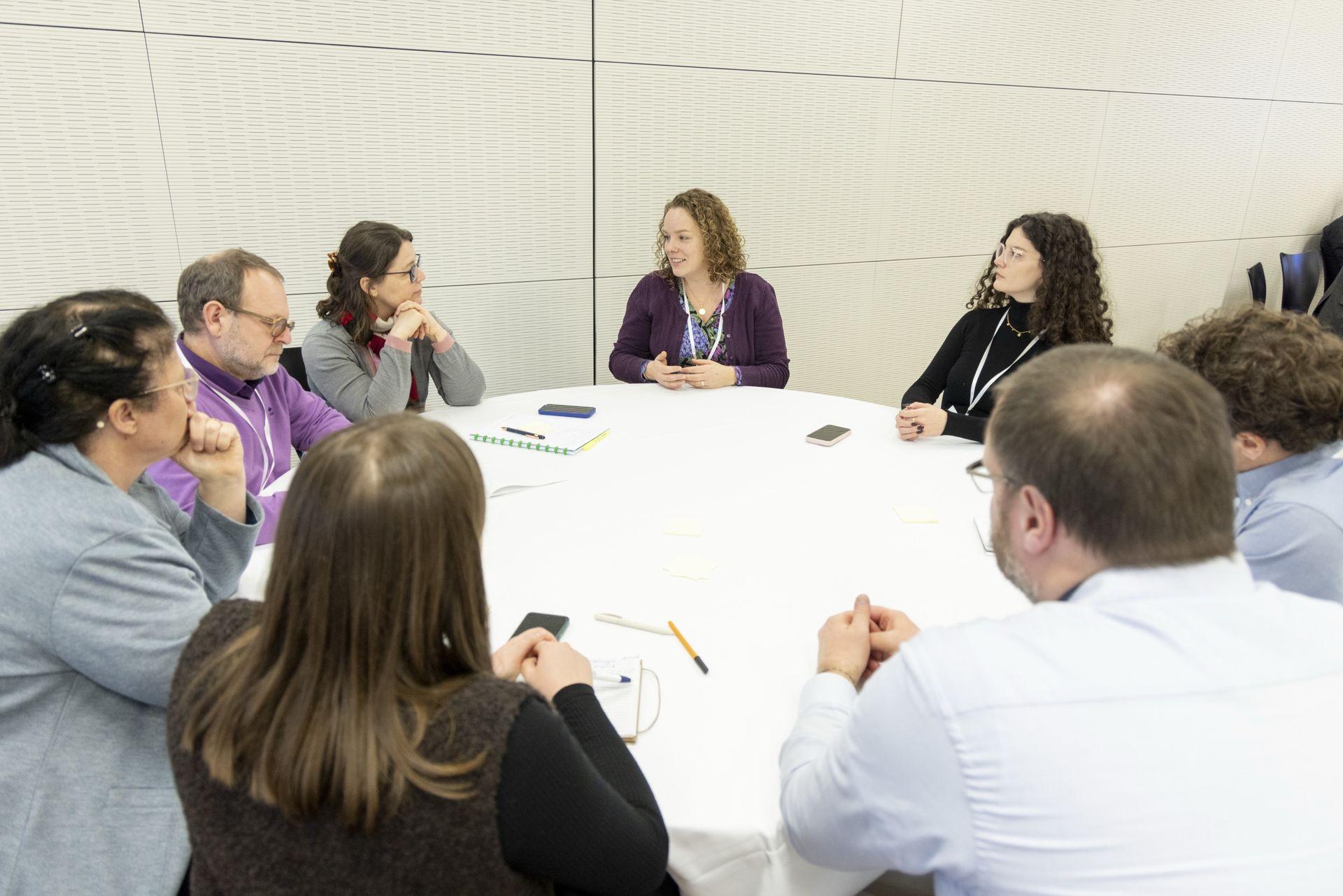
In order to better achieve their results and impact, existing project partnerships can be adapted or modified.
Only organisations relevant to the selected output for capitalisation and that have a specific role to play should be included. Projects are encouraged to include new partners to better reach the relevant territories, target audiences or fields / domains aimed for.
These can come from other projects, funded or not by NWE itself, Interreg, other EU programmes…thus exploiting synergies between various initiatives. New partners will in any case need to show how they add value with their skills and knowledge to leverage the project results obtained so far and enhance territorial impact in NWE.
Duration and Timeline
The duration of capitalisation projects will be limited to maximum 18 months to favour implementation-ready capitalisation projects.
The provisional timeline for the second call for capitalisation is as follows:
7 December 2026
Call opening
20 May 2027
Call closure
Autumn 2027
Decison-making
Budget
For the second call for capitalisation, an indicative amount of EUR 7 million ERDF is made available, without commitment to full allocation.
The maximum ERDF grant rate for partners will be 60% of the total capitalisation initiative budget and all partners will need to provide match-funding.
The capitalisation project budget must be minimally EUR 200,000 and must not exceed EUR 800,000 of total eligible costs (EUR 480,000 ERDF).
Save the date! Cap call 2 launch webinar on 10 December 2027
Interested in submitting an application for the second call for capitalisation? Don’t miss our Launch webinar on 10 December, just a few days after the official opening of the call on Jems, with the Terms of Reference and other supporting documents.
It will be an opportunity to learn more about the Programme's objectives and expectations for this call, receive practical guidance on preparing and submitting your application, and get answers to any questions you may have.
How to get assistance?
Until the official opening of the call, feel free to get in touch with your NWE Contact Point if you wish to have a first exchange on your capitalisation idea.
All contact details can be found here.