On a windy morning in Zeebrugge along the Belgian coast, a familiar sight washes ashore: long ribbons of brown and green seaweed. For many of us, it’s little more than a sign of changing tides. But for Europe’s fast-growing algae sector, this humble material represents one of the continent’s greatest untapped resources.
From food to packaging, natural dyes to building materials, seaweed can serve countless value chains. And yet, most of its potential remains unused. Today, most seaweed processors extract just one ingredient, such as alginates or biostimulants, and discard and incinerate the rest, releasing CO2 in the process.
Valuable fibres, minerals and sugars are lost, and with them the chance to build a truly circular, climate-friendly industry.
What if we could turn every part of the seaweed into something valuable?
That question became the starting point of the Algae ALOR project. It began with a simple idea: side streams—the leftovers of processing—shouldn’t be treated as waste, but as an opportunity.
Strong transnational cooperation was essential. By pooling expertise and bringing together scientists, entrepreneurs and industry organisations from across North-West Europe, the project set out to show how the sector could unlock that potential and strengthen regional supply chains in food, agriculture, cosmetics and materials.
Their shared mission: prove that seaweed can power circular bioeconomy in North-West Europe.
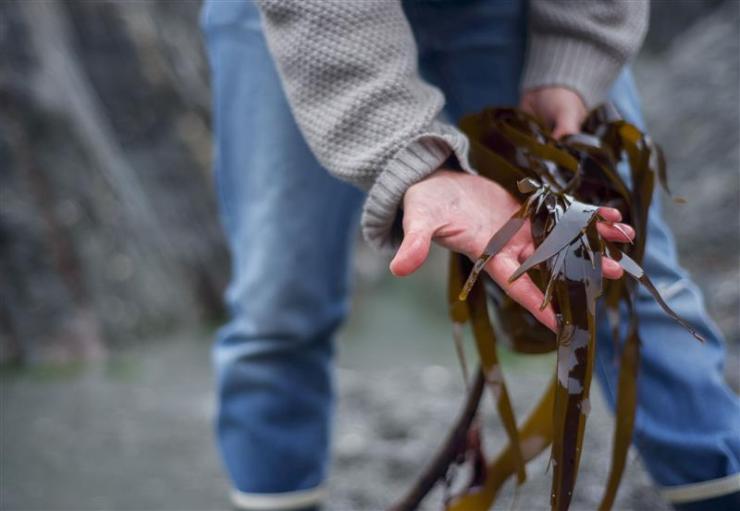
Building a circular business case for seaweed
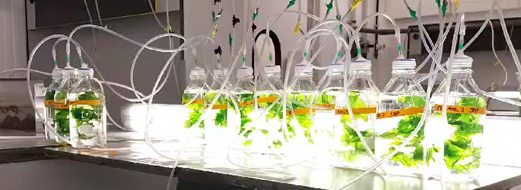
The project focused mainly on brown and green seaweeds, widely available across the NWE area.
By studying their composition and testing new processing techniques, partners from three countries (IE, NL, BE) cooperated to explore how every component, such as fibres, pigments, sugars, and minerals, could serve a different industry.
Companies began experimenting with natural textile dyes made from seaweed residues, offering a sustainable alternative to synthetic colourants. Others transformed leftover fibres into circular building materials that can replace virgin resources in construction and design. Alongside this, new digital tools were developed to help businesses measure environmental impact and assess the financial feasibility of seaweed-based products. Research teams also refined indoor cultivation methods, ensuring a steady supply of high-quality biomass for further testing.
When the AlgaeVALOR project ended in 2025, it had achieved more than a series of technical results. It developed new seaweed-based products, such as natural dyes and composite materials, that are now ready to move towards market testing. It created a strong foundation of knowledge, from cultivation protocols to practical handbooks, giving businesses and researchers the tools they need to work with seaweed more effectively. It also produced decision-support tools that link environmental benefits with economic feasibility, helping guide future investments in circular production.
Most importantly, the project demonstrated a viable model for regional seaweed valorisation hubs, showing how coastal communities can transform residual biomass into new economic opportunities. AlgaeVALOR has proven that seaweed is more than an emerging resource, it is a cornerstone of a circular future for North-West Europe – and this is only the beginning!
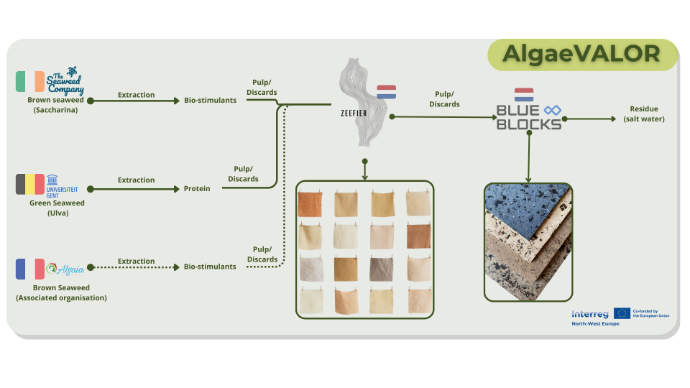
AlgaeVALOR key figures
- 4 partners
- 3 countries: Netherlands, Belgium, and Ireland
- Cooperating from 2024 to 2025
- Budget: € 750k